

Graphite Crucible
Hongshun:Your Professional Graphite Crucible manufacturer!
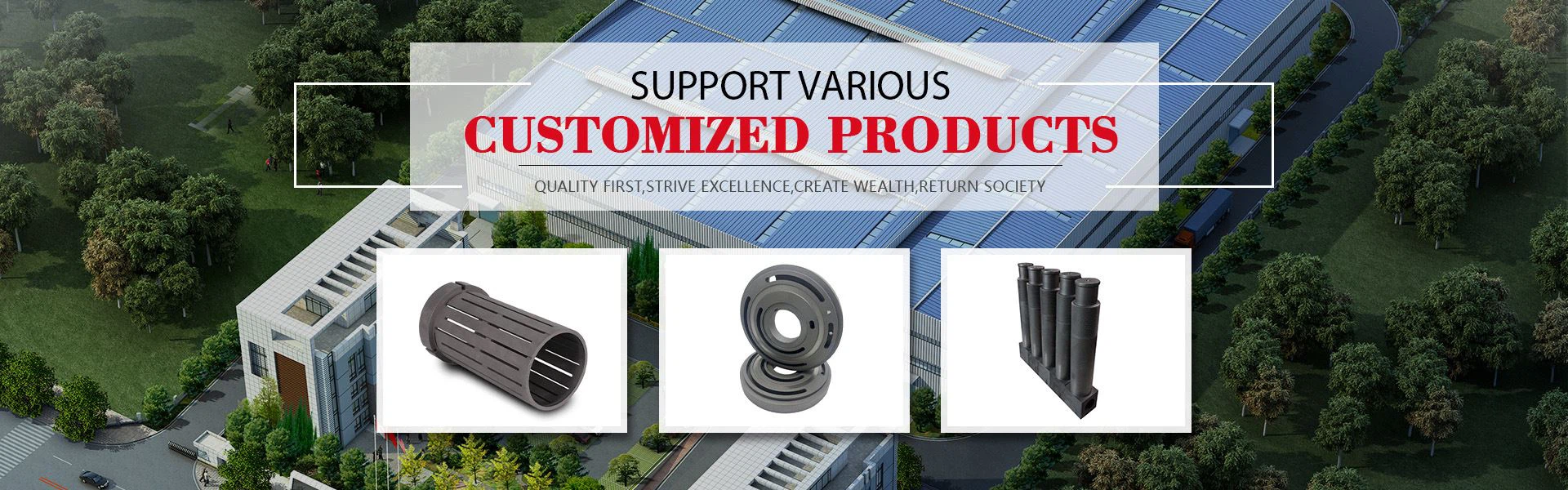
Hongshun Graphite focuses on graphite design and processing. The company has more than ten years of experience in graphite processing and has a complete series of design, processing and production systems. It mainly produces customized graphite products including graphite crucibles, graphite rods, graphite plates, graphite blocks, graphite electrodes, graphite rotors, graphite parts and graphite products of various sizes.
Why Choose Us
Advanced equipment
Our company has a complete production chain from design to production. We have more than 20 CNC lathes and milling machines. , drilling machines, ordinary lathes, and more than ten CNC engraving machines.
Professional team
Our company has 5 to 8 r&d personnel and more than 50 production personnel. It is a strong and technologically advanced production team.
High quality
We use high-quality graphite raw materials for processing and production. Each customer's product undergoes strict production inspection to ensure that the quality of the products produced reaches the customer's standards.
Remarkable service
Our team can design various graphite products for you, support customization according to drawings and processing according to samples, and provide you with 24-hour after-sales service and technical support.


Application of graphite crucible
Heat treatment process
Graphite crucibles play a vital role in high-temperature applications, especially in furnaces and processes involving extreme heat. These crucibles are designed to withstand the intense thermal conditions.
Metallurgy
Graphite crucibles are utilized for melting and casting various metals and alloys such as gold, silver, and copper. They're also employed in the manufacture of steel, iron, aluminum, and other metals that necessitate high-temperature melting.
Research and development
They are used in chemical labs for high-temperature experiments and compound synthesis, providing a controlled environment for reactions, ensuring the purity of the processed substances.
Chemical industry
Graphite crucibles are employed in chemical reactions necessitating high temperatures, such as organic synthesis, polymerization, and pyrolysis processes.
Semiconductor industry
Graphite crucibles are used in the production of semiconductors like silicon and germanium. It is used for growing single crystals of these semiconductors at high temperatures.
Arts and crafts
Graphite crucibles play a key role in jewelry and sculpture production. They enable artists to melt metal and cast it into molds, resulting in unique, one-of-a-kind pieces.
Advantages of graphite crucible
High thermal conductivity
Graphite crucibles have a high thermal conductivity, which reduces the time required for heating and cooling. Therefore, it saves the overall production time and reduces the cost of production.
Chemical resistance
Graphite crucibles are highly resistant to most chemicals, including acids, bases, and other corrosive substances. It helps in ensuring the purity of the melted material and prevents contamination of the final product.
High temperature resistance
Graphite crucibles have a high temperature resistance due to their ability to withstand high melting points. It can withstand temperatures of up to 3500°c in a vacuum or inert atmosphere.
Durable and long-lasting
Graphite crucibles have a longer lifespan than other materials, which makes it a cost-effective choice for industrial applications. It has high strength and is resistant to cracks or deformation even at high temperatures.
Low specific resistance
The low specific resistance of graphite allows for better heat distribution within the crucible, ensuring that the material being melted is heated evenly. This is crucial for maintaining the quality and consistency of the melted material.
Manufacturing processes of graphite crucible
Raw material selection
High-purity natural or synthetic graphite powder is selected as the primary raw material. The purity of the graphite significantly impacts the crucible’s performance.


Mixing and binding
The graphite powder is mixed with a binder, typically a resin or pitch, to enhance its mechanical properties and facilitate shaping.
Forming
The mixture is then formed into crucibles using methods such as isostatic pressing or extrusion. This step requires precise control to ensure uniform density and structural integrity.


Baking
The formed crucibles are baked at high temperatures in a non-oxidizing atmosphere to carbonize the binder and enhance the strength and thermal properties of the graphite.
Graphitization
In this step, the crucibles undergo a high-temperature treatment (usually above 2500℃) to convert the carbonized binder into graphite, further improving the crucible’s thermal and mechanical properties.


Machining and finishing
After graphitization, the crucibles are machined and polished to achieve the desired dimensions and surface finish.
Proper handling and maintenance of graphite crucibles
Dry storage
Graphite crucibles must be stored in a dry environment, away from moisture. Placing them on dry surfaces or wooden racks provides better protection against humidity.
01
Gentle handling
Due to their fragile nature, graphite crucibles should be handled with care to avoid any unnecessary impact or vibration. It is essential to practice a "handle with care" approach during transportation.
02
Preheating
Before use, it is crucial to preheat the crucible gradually, gradually raising the temperature to 500°c. This process helps prevent thermal shock and extends the crucible's lifespan.
03
Proper filling
When adding materials to the crucible, attention should be paid to its capacity. The filling quantity should range between one-third and two-thirds of the crucible's volume.
04
Controlled material addition
To avoid excessive expansion and damage to the crucible, it is important to add materials based on the crucible's melting capacity. Overloading should be avoided.
05
certificate
We have ISO 9001,certification, CE certification, EAC certification etc.


FAQ
We're well-known as one of the leading graphite crucible manufacturers and suppliers in China. Please feel free to buy high quality graphite crucible made in China here from our factory. For customized service, contact us now.
Graphite Screw, Graphite Rod, High Temperature Resistant Graphite Block