


Company Profile
Huixian Hongshun Graphite Co., Ltd. focuses on graphite design and processing. The company has more than ten years of experience in graphite processing. The company has a series of completed production systems for design and processing.
The company is located in Huixian City, Xinxiang, Henan Province, China. It mainly produces customized graphite products including graphite crucibles, graphite rods, graphite plates, graphite blocks, graphite electrodes, graphite rotors, graphite parts and graphite products of various sizes.and supports sales to various countries.
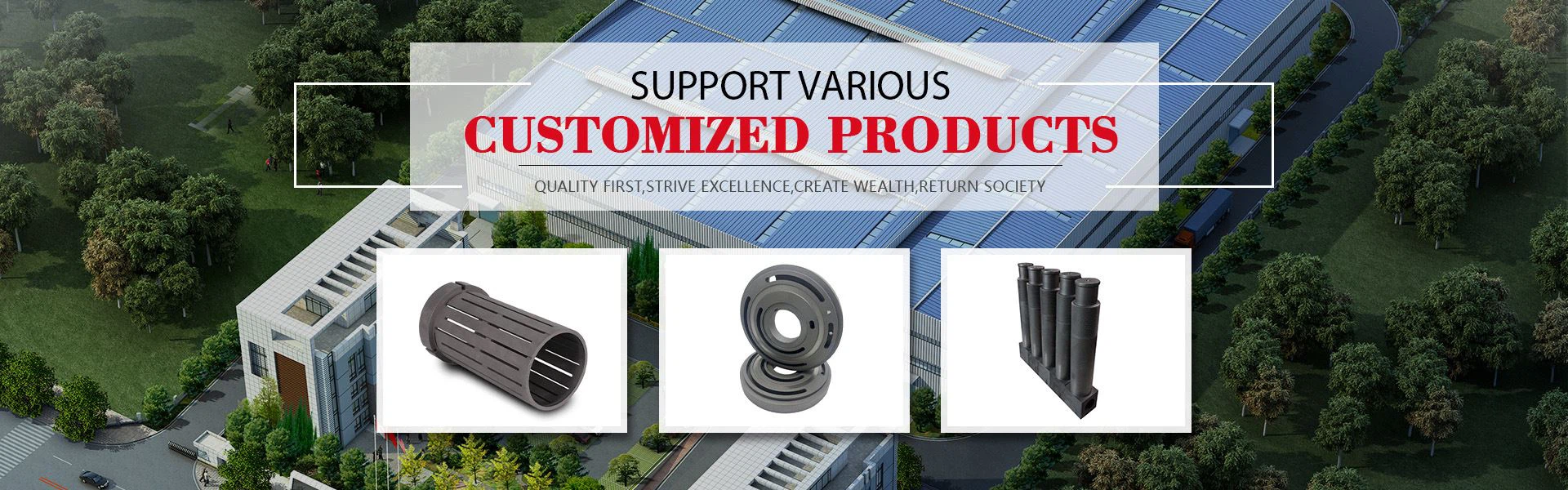
Support customization, graphite rods, graphite crucibles, graphite blocks, graphite plates, graphite sheets, graphite parts, graphite rotors, graphite boats, graphite tanks, graphite powder, graphite chips, etc.
Why choose us?
Professional team
The company has 5 to 8 R&D personnel and more than 50 production personnel. It is a strong and technologically advanced production team.
Advanced equipment
The company has a complete production chain from design to production. We have more than 20 CNC lathes and milling machines. , drilling machines, ordinary lathes, and more than ten CNC engraving machines.
Rich experience
Huixian Hongshun Graphite Co., Ltd. focuses on graphite design and processing. The company has more than ten years of experience in graphite processing. The company has a series of completed production systems for design and processing.
Quality control
Each customer's product undergoes strict production inspection to ensure that the quality of the products produced reaches the customer's standards. Required standards and have 7*24 hours after-sales service.


What is High Quality Graphite Plate
High quality graphite plates are commonly used for structural ribs, components of kilns and copper, zinc and aluminum extrusion machines, cable manufacturing, carbide, electrodes, plastic injection molding parts, lubricating and sealing plates, and the most widely used-bipolar fuel cell construction. They can also be used to dam molten metal in metal fabrication plants and provide a protective barrier in welding processes.
Benefits of High Quality Graphite Plate
Excellent thermal management capabilities
At the heart of graphite board's appeal is its remarkable thermal management capabilities. Graphite is renowned for its ability to withstand high temperatures without deforming, which is crucial for applications in aerospace, automotive, and electronics sectors. In aerospace, for instance, graphite boards are used in thermal insulation systems, protecting sensitive components from the extremes of temperature encountered during flight. The automotive industry similarly employs these boards in applications that require effective heat dissipation, such as electric vehicle batteries and engine components.
Lightweight and strong
Another significant advantage of graphite boards is their lightweight nature combined with strength. Unlike metals that add considerable weight to structures, graphite boards provide a strong yet lightweight alternative. This property is particularly important in the construction of lightweight structures where reducing overall mass is advantageous without sacrificing strength. In future-oriented designs, such as those seen in green energy technologies, the use of graphite boards can lead to more efficient designs and reduced energy consumption.
Electrical conductivity
Electrical conductivity is another standout feature of graphite boards. These materials are extensively utilized in electronics, where they serve as substrates for circuit boards and heat spreaders. With the ever-growing demand for miniaturization in electronic devices, graphite boards allow for efficient thermal management while maintaining space efficiency. Furthermore, their conductive properties make them suitable for applications in batteries and supercapacitors, where improved energy storage and performance are essential.
Chemical stability and corrosion resistance
In addition to their mechanical and thermal properties, graphite boards are chemically stable and resistant to corrosion. This resistance makes them ideal for use in harsh environments, such as chemical processing or mining. They can act as seals or gaskets, maintaining integrity and preventing leaks in systems exposed to aggressive substances. Their ability to operate under extreme conditions ensures longevity and reliability, reducing downtime and maintenance costs in industrial applications.
Graphite, a seemingly ordinary but magical substance, has played an important role in many fields such as science, industry and art since its discovery. Graphite plate, as an important application form of graphite, leads the way in many fields with its unique properties.
Graphite plate is a plate made of processed graphite material. It inherits many excellent properties of graphite, such as high electrical conductivity, high thermal stability, good chemical stability and unique lubrication properties.
In the field of science and technology, graphite plates are widely used in the electronic and electrical industries due to their excellent conductive properties. For example, graphite plates play an indispensable role in the fields of integrated circuits, semiconductor devices, and new energy batteries. In addition, graphite plates also have good thermal conductivity properties, so they are also widely used in high-tech fields such as aerospace and nuclear energy.
In the industrial field, graphite sheets' wear resistance, high temperature resistance and corrosion resistance make them ideal for many industrial equipment. For example, in petrochemical, steel smelting and other industries, graphite sheets are often used as sealing materials, wear-resistant parts and anti-corrosion coatings. At the same time, the lubrication properties of graphite plates make them widely used in machinery manufacturing, mold manufacturing and other fields.
In the field of art, graphite plates also show their unique charm. Graphite sheets have good plasticity and colorability and can be shaped into various shapes. At the same time, they can also present rich colors through different coloring processes. This makes graphite sheets widely used in art fields such as sculpture and painting. Artists can use graphite sheets to create works of art that are both uniquely beautiful and functional.
Of course, the applications of graphite sheets go far beyond this. With the continuous development of science and technology, the applications of graphite sheets in new energy, environmental protection, biomedical and other fields are also constantly expanding. For example, in the field of new energy, graphite plates can be used to prepare high-performance lithium-ion battery anode materials; in the field of environmental protection, graphite plates can be used in sewage treatment and air purification; in the field of biomedicine, graphite plates can be used to prepare biosensors and Drug carriers, etc.
Graphite plate, as a unique and important material, plays an important role in many fields such as technology, industry, and art. With the continuous advancement of science and technology and the continuous expansion of application fields, the application prospects of graphite plates will be broader. We have reason to believe that in the future development, graphite sheets will continue to make important contributions to the progress and development of human society.
Process of High Quality Graphite Plate


Raw material selection
The first step in the production process of graphite plates is the selection of raw materials. The quality of the raw materials used in the production process has a significant impact on the final product's quality, strength, and durability. The most common raw materials used in the production of graphite plates are natural graphite flakes and synthetic graphite.
Preparation
Once the raw materials have been selected, they undergo a series of preparation steps, including crushing, grinding, and sieving. The purpose of these steps is to ensure that the raw materials are of the correct size and shape for the subsequent steps in the production process.
Molding
The next step in the graphite plate production process is molding. There are several molding techniques used in the industry, including extrusion, isostatic pressing, and vibration molding. The choice of molding technique depends on various factors, including the shape and size of the graphite plate and the desired properties of the final product.
Baking
After the molding process, the graphite plates are subjected to a baking process, also known as carbonization. The purpose of this step is to remove any remaining impurities from the graphite and convert it into a pure form of carbon. The baking process is typically carried out in a high-temperature furnace, with temperatures ranging from 1000 to 3000 degrees Celsius.
Finishing
The final step in the graphite plate production process is finishing. This step involves the sanding, polishing, and cutting of the graphite plates to the desired size and shape. The finishing process is critical to the final product's quality, as it determines the surface finish, flatness, and dimensional accuracy of the graphite plate.
How to Maintain High Quality Graphite Plate
Temperature control
The graphite plate should pay attention to temperature control during heating to avoid loss of graphite plate due to excessively high or low temperature. When using graphite plate for heating, the temperature should be set correctly according to specific requirements, and try to avoid overheating and burning of graphite plate due to excessive temperature.
Slow temperature change
Graphite plate is more sensitive to temperature changes, and sharp temperature changes should be avoided as much as possible during heating and cooling. Especially when using graphite plate under high temperature, attention should be paid to the slow process of temperature change to avoid cracking or damage of graphite plate caused by thermal stress.
Avoid mechanical shock
Graphite plate has a certain brittleness and is easily broken by mechanical shock. When storing and carrying graphite plate, care should be taken to handle it with care to avoid impact or collision. During use, graphite plate should be protected from external impact or collision to avoid cracks or damage to graphite plate.
Cleaning and maintenance
Regular cleaning of the graphite plate is an important part of maintenance. According to the use of the graphite plate, you can choose to wipe it with a damp cloth or use a hair dryer to blow away dust and impurities. If there is oil or residue on the surface of the graphite plate, you can use a special cleaner to clean it and clean it thoroughly with clean water.
Prevent corrosion
Graphite plates are susceptible to corrosion in some special environments, such as erosion by chemicals such as acids and alkalis. When using, care should be taken to avoid contact with these corrosive substances to prevent the surface of the graphite plate from being corroded and damaged.
Prevent adhesion
During the heating process of the graphite plate, the high temperature will cause some substances to adhere to the surface of the graphite plate, especially liquid or semi-solid substances. These adhesions may affect the thermal conductivity of the graphite plate or cause damage. Therefore, when using the graphite plate, care should be taken to avoid liquid or semi-solid substances from contacting the surface of the graphite plate.
Maintenance and storage
If the graphite plate is not used for a long time, it should be stored in a dry, ventilated place and properly protected. You can use a special packaging box or protective cover to wrap the graphite plate to avoid the intrusion of dust and impurities.
How to Choose the Right High Quality Graphite Plate
Graphite plates come in various types, each with unique characteristics and properties. It is essential to understand the differences between these types to choose the most suitable option for your specific application. Common types of graphite plates include:
High-density graphite plates
High-density graphite plates are known for their exceptional strength and durability. They are often used in high-temperature applications where thermal stability is critical. These plates are ideal for environments with extreme heat and pressure.
Isotropic graphite plates
Isotropic graphite plates have uniform properties in all directions, making them highly resistant to thermal shock and mechanical stress. They are commonly used in applications that require high thermal conductivity and reliability.
Extruded graphite plates
Extruded graphite plates are manufactured through a process of pressing and baking graphite materials. They offer excellent chemical resistance and are suitable for corrosive environments. These plates are often used in chemical processing and semiconductor industries.
When selecting a graphite plate, the size and shape are essential considerations. The dimensions of the plate should align with the requirements of your application to ensure proper fit and functionality. Factors to consider when choosing the size and shape of a graphite plate include:
Thickness
The thickness of the graphite plate plays a crucial role in determining its strength and thermal conductivity. Thicker plates are more robust but may have lower thermal conductivity, while thinner plates offer better heat transfer but may be less durable.
Length and width
The length and width of the graphite plate should match the dimensions of the equipment or machinery it will be used in. Ensure that the plate is large enough to cover the entire surface area effectively.
Shape
Graphite plates are available in various shapes, including square, rectangular, and circular. The shape of the plate should be chosen based on the specific requirements of your application. Consider factors such as surface area, contact points, and ease of installation when selecting the shape.

Our Factory
The company has 5 to 8 R&D personnel and more than 50 production personnel. It is a strong and technologically advanced production team. The company has a complete production chain from design to production. We have more than 20 CNC lathes and milling machines. , drilling machines, ordinary lathes, and more than ten CNC engraving machines.


FAQ
Hot Tags: high quality graphite plate, China high quality graphite plate manufacturers, suppliers, High Purity Graphite Rod, Graphite Screws, Isostatic Graphite Block, High Temperature Resistant Graphite Ring, Graphite Plate, High Density Graphite Rod