


Company Profile
Huixian Hongshun Graphite Co., Ltd. focuses on graphite design and processing. The company has more than ten years of experience in graphite processing. The company has a series of completed production systems for design and processing.
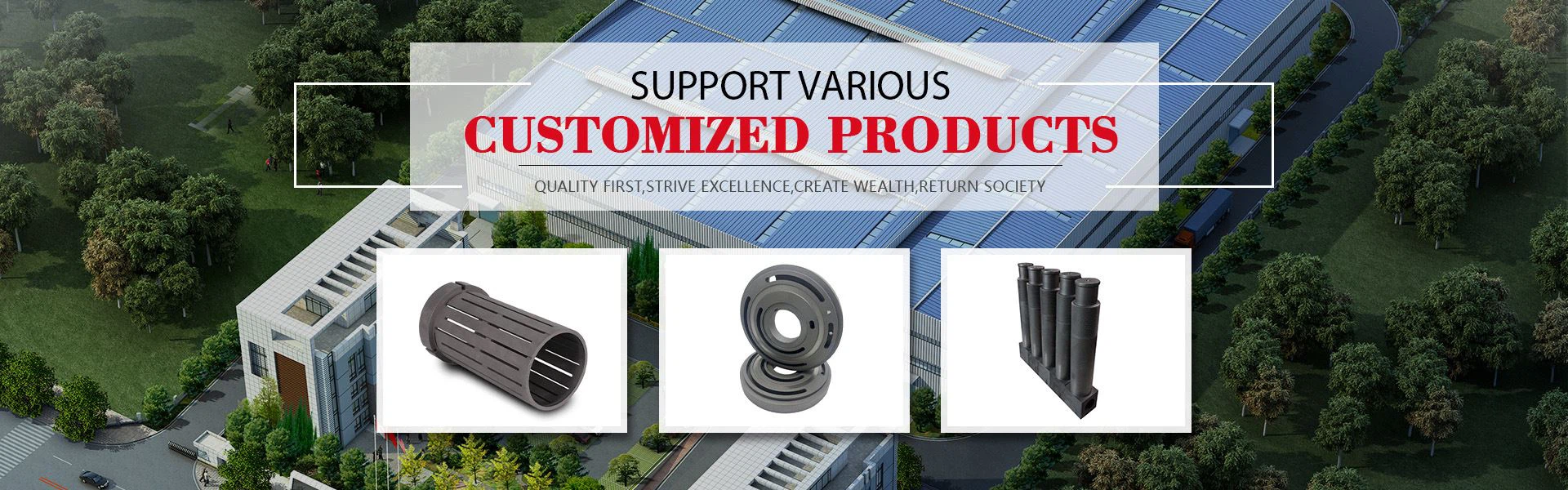
The company is located in Huixian City, Xinxiang, Henan Province, China. It mainly produces customized graphite products including graphite crucibles, graphite rods, graphite plates, graphite blocks, graphite electrodes, graphite rotors, graphite parts and graphite products of various sizes.and supports sales to various countries.
Support customization, graphite rods, graphite crucibles, graphite blocks, graphite plates, graphite sheets, graphite parts, graphite rotors, graphite boats, graphite tanks, graphite powder, graphite chips, etc.
Why choose us?
Professional team
The company has 5 to 8 R&D personnel and more than 50 production personnel. It is a strong and technologically advanced production team.
Advanced equipment
The company has a complete production chain from design to production. We have more than 20 CNC lathes and milling machines. , drilling machines, ordinary lathes, and more than ten CNC engraving machines.
Rich experience
Huixian Hongshun Graphite Co., Ltd. focuses on graphite design and processing. The company has more than ten years of experience in graphite processing. The company has a series of completed production systems for design and processing.
Quality control
Each customer's product undergoes strict production inspection to ensure that the quality of the products produced reaches the customer's standards. Required standards and have 7*24 hours after-sales service.


What is High Purity Graphite Rod
High purity graphite rods are integral to a wide array of sectors, driven by their unique and advantageous properties. From facilitating advancements in electronics to supporting the production of high-performance components in aerospace and automotive applications, these rods stand as a testament to the versatility and indispensable nature of graphite in modern technology. As industries evolve and seek more efficient materials, high purity graphite rods will undoubtedly continue to play a pivotal role in shaping the future of manufacturing and technology.
Benefits of High Purity Graphite Rod
Increased mechanical strength at high temperatures
Graphite exhibits a unique property where it becomes stronger when heated from room temperature to 2,000 °C. This is due to a decrease in internal stresses as the temperature rises, which enhances its mechanical strength. This characteristic allows for the design of smaller, more robust components with fewer support systems. It enables larger batch sizes in manufacturing processes.
High thermal and electrical conductivity
Graphite rods are known for their exceptional thermal conductivity, which surpasses that of common metals like iron, lead, and steel. This conductivity increases with temperature, making graphite an excellent choice for heating elements and other applications requiring efficient heat transfer. Additionally, the electrical conductivity of graphite is significantly higher than that of stainless steel and carbon steel, making it suitable for electrical applications.
Formation of protective oxide layer
When heated in air, graphite rods develop a dense silicon oxide film on their surface. This film acts as an anti-oxidation protective layer, significantly extending the lifespan of the graphite rods. However, this protective layer can crack due to temperature fluctuations or intermittent use, which may lead to increased resistance and reduced effectiveness over time.
Versatility in industrial applications
Graphite tubes are used across various industries including chemical, metallurgical, pharmaceutical, electroplating, and environmental protection. They are also utilized in consumer products such as kite frames, tent poles, and fishing rods. The material's resistance to acids, structural strength, impact resistance, and ease of maintenance make it a preferred choice in many applications.
Additional properties
Graphite rods also possess fine grain size, high purity, high strength, low specific resistance, and excellent thermal shock resistance. These properties contribute to their ease of precise machining and good anticorrosion capabilities. They further enhance their utility in high-temperature and harsh environmental conditions.
Application of High Purity Graphite Rod
One of the primary applications of high purity graphite rods is in the semiconductor industry. The rods are used in the fabrication of components like heating elements and fixtures, where they serve as carriers for high-temperature processes. Their ability to endure extreme temperatures without deforming is crucial in environments such as crystal growing and semiconductor manufacturing. Here, high purity graphite rods help to create the optimal conditions for the production of high-quality semiconductor materials.
In the realm of metallurgy, high purity graphite rods play a significant role in the production of castings and molds. The rods are employed in the manufacturing of crucibles, ensuring efficient melting and shaping of metals. Their excellent thermal conductivity allows for even heat distribution, which is vital in preventing defects in metal casting processes. Furthermore, the inert nature of high purity graphite minimizes contamination of the metals being melted, enhancing the integrity and quality of the final products.
The aerospace and automotive industries also benefit greatly from high purity graphite rods. These rods are utilized in the production of components that require lightweight materials with high strength and stability at elevated temperatures. For instance, graphite is increasingly used in the making of seals, gaskets, and bearings, where traditional materials may fail to perform under demanding conditions. The thermal shock resistance and low thermal expansion properties of high purity graphite make it a favored choice in these critical applications.
Moreover, the burgeoning field of renewable energy has found a valuable ally in high purity graphite rods. In the manufacture of batteries, particularly lithium-ion batteries, these rods are used in the production of anodes. The efficiency and energy density of batteries are significantly influenced by the materials used, and high purity graphite provides an exceptional option due to its superior electrical conductivity and chemical stability.
To meet the growing demand for high purity graphite rods, manufacturers are continuously refining their production processes. Advanced purification techniques, high-temperature graphitization, and meticulous quality control are employed to ensure that the graphite rods meet the stringent requirements of various industries. As technological advancements progress, the importance of high purity graphite rods is poised to expand further, with potential innovations paving the way for new applications.
Process of High Purity Graphite Rod


Cokes: This is a byproduct in oil refineries, produced by heating hard coal at temperatures between 600 and 1200°C in a specialized coke oven. This process, conducted with limited oxygen and combustion gases, yields a product with a higher calorific value than conventional fossil coal.
Pulverizing: After thorough inspection of the raw materials, they are pulverized to achieve a specific grain size. Specialized machines grind the material into fine coal dust, which is then collected in bags and sorted by grain size.
Kneading: Following the grinding of coke, it is mixed with pitch. At elevated temperatures, this mixture allows the coal to melt and blend with the coke grains.
Second pulverizing: After mixing, small carbon balls are formed, which need to be ground into very fine particles.
Isostatic pressing: Once the fine grains of the correct size are prepared, they are placed into large molds corresponding to the final block dimensions. The powdered carbon in these molds is subjected to high pressure (over 150 MPa), ensuring uniform pressure and force are applied to the grains. This process achieves a consistent graphite structure throughout the mold.
Carbonizing: The carbonization stage, which can take 2 to 3 months, involves baking the material in large furnaces at temperatures reaching 1000°C. The temperature is carefully controlled to prevent defects or cracks, resulting in a block with the desired hardness.
Pitch impregnation: To reduce porosity, the block may be impregnated with pitch and reheated. A pitch with lower viscosity than the binder pitch is typically used for impregnation, allowing for more precise filling of any gaps.
Graphitizing: At this stage, the carbon atoms' matrix becomes ordered, and the material undergoes graphitizing by heating to approximately 3000°C. This process significantly enhances the material's electrical conductivity, density, thermal conductivity, and corrosion resistance, as well as improves machining efficiency.
Graphite material: After graphitization, it is essential to inspect all graphite parameters, including grain size, bending strength, density, and compression strength.
Machining: Once the material has been thoroughly prepared and checked, it can be machined into graphite rods.
The greater the amount of current applied to the graphite rod, the higher the surface temperature of the graphite rod. It is recommended to use the smallest possible surface load density (power). Please note that the value recorded at the cold end of the graphite rod is the current and voltage at 1000°C in the air, which is consistent with practical applications. Under normal conditions, the surface power of graphite rods is obtained from the relationship between the furnace temperature and the surface temperature of the graphite rods. It is recommended to use the surface power (W/cm2) of 1/2-1/3 of the ultimate density of the graphite rods.
Graphite rods can be connected in parallel as much as possible. If the resistance values of the graphite rods are different, the load of the graphite rods with high resistance is concentrated when connected in series, which will cause a certain graphite rod resistance to be added rapidly and the life span will be shortened.
After the graphite rod is heated in the air, a dense silicon oxide film is formed on the surface, which forms an anti-oxidation maintenance film, which has the effect of extending the life. In recent years, various coatings have been developed to avoid cracking of graphite rods and used in furnaces with various gases. Lubricate the graphite rod.
The temperature distribution characteristics of graphite rods. The introspection specification at the time of new shipment is that it is within Δ60℃ within the useful fever length. Of course, the temperature distribution will increase with its aging, and eventually reach 200℃. The detailed temperature distribution changes also differ due to differences in furnace atmosphere and operating conditions.
When continuing to use graphite rods, I hope to add resistance slowly to maintain a long life.
The life of the graphite rod will be shorter as the operating temperature is higher. Therefore, after the furnace temperature exceeds 1400℃, the oxidation rate will accelerate and the life will be shortened. Please be careful not to make the surface temperature of the graphite rod too high during use.

Our Factory
The company has 5 to 8 R&D personnel and more than 50 production personnel. It is a strong and technologically advanced production team. The company has a complete production chain from design to production. We have more than 20 CNC lathes and milling machines. , drilling machines, ordinary lathes, and more than ten CNC engraving machines.


FAQ
Hot Tags: high purity graphite rod, China high purity graphite rod manufacturers, suppliers, High Temperature Resistant Graphite Ring, Carbon Graphite Ring, Gold And Silver Smelting Graphite Crucible, High Quality Graphite Ring, Graphite Products, Graphite Parts