

Hey there! As a supplier of graphite rings, I often get asked a bunch of questions about these nifty little things. One question that pops up quite a bit is, "Can graphite rings be worn in cold weather?" Well, let's dive right into it and find out.
First off, let's talk a bit about what graphite rings are. Graphite is a form of carbon, and it's known for its unique properties. It's soft, has a low friction coefficient, and is a good conductor of heat and electricity. Graphite rings come in different types, like the Isostatic Graphite Ring, High Strength Graphite Ring, and Carbon Graphite Ring. Each type has its own set of characteristics and uses.
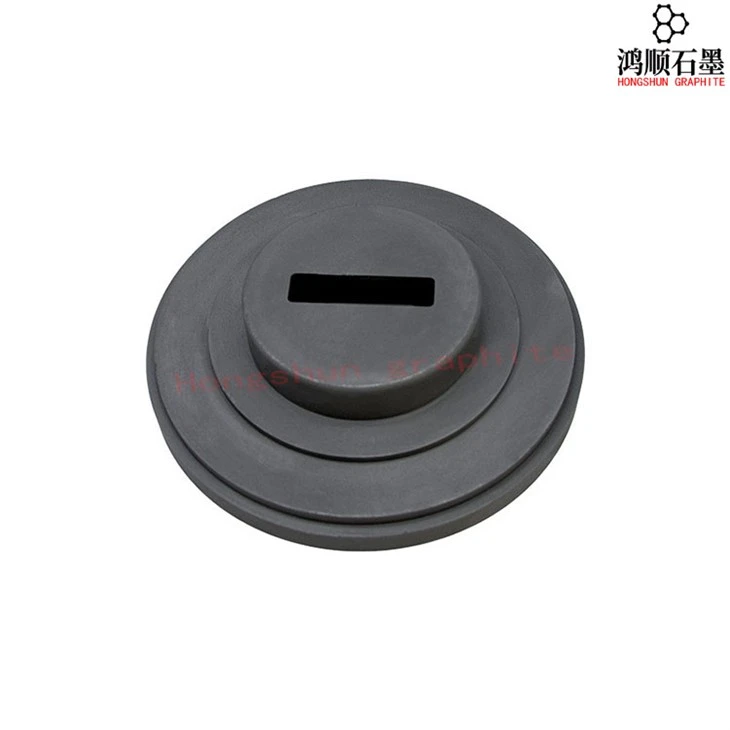

Now, back to the main question: Can you wear graphite rings in cold weather? To answer that, we need to understand how graphite behaves in cold temperatures.
Graphite has a relatively high thermal conductivity. This means it can transfer heat quite well. In cold weather, when the temperature drops, the graphite ring will quickly lose heat to the surrounding environment. You might think this is a bad thing, but it's not necessarily so.
One of the great things about graphite is its stability. It has a very low coefficient of thermal expansion. What does that mean? Well, it means that when the temperature changes, the graphite ring won't expand or contract much. Unlike some metals that can expand or contract significantly in cold or hot weather, potentially causing the ring to become too tight or too loose, graphite rings stay pretty much the same size. So, from a sizing perspective, you don't have to worry about your graphite ring getting all wonky in the cold.
But there are a few things to keep in mind. While graphite is stable, if it's exposed to extremely cold temperatures for a long time, it can become a bit brittle. However, this is more of an issue in industrial settings where the graphite is used under high stress and extreme cold. For a graphite ring that you wear on your finger, the chances of it becoming brittle just because it's cold outside are pretty slim.
Another factor to consider is comfort. Since graphite conducts heat well, it will feel cold to the touch in cold weather. Some people might not like that initial cold feeling when they put on the ring. But once it warms up to your body temperature, it should feel just fine.
Now, let's talk about the different types of graphite rings and how they might fare in cold weather.
The Isostatic Graphite Ring is made using a special isostatic pressing process. This gives it a more uniform structure and better mechanical properties. In cold weather, it will have the same stability as other graphite rings. Its uniform structure also means it's less likely to develop cracks or other issues due to temperature changes.
The High Strength Graphite Ring is, as the name suggests, stronger than regular graphite rings. This extra strength can be an advantage in cold weather. It's more resistant to any potential brittleness that might occur in extremely cold conditions.
The Carbon Graphite Ring combines the properties of carbon and graphite. It has good thermal conductivity and stability, just like other graphite rings. In cold weather, it will perform similarly, keeping its shape and size while transferring heat to the environment.
So, in conclusion, yes, you can wear graphite rings in cold weather. They are stable, won't change size much, and while they might feel cold at first, they should be comfortable once they warm up to your body temperature.
If you're thinking about getting a graphite ring, whether it's for everyday wear or a special occasion, we've got you covered. We offer a wide range of high - quality graphite rings, including the types I mentioned above. Our rings are made with the best materials and manufacturing processes to ensure you get a product that will last.
If you're interested in purchasing a graphite ring or have any questions about our products, don't hesitate to reach out. We're here to help you find the perfect graphite ring for your needs. Whether it's for yourself or as a gift, we can assist you in making the right choice.
References
- General knowledge about graphite properties from materials science textbooks.
- Industry reports on the performance of graphite products in different temperature conditions.