

Hey there! As a supplier of Electrode Graphite Rods, I've been thinking a lot about how the surface tension of these rods affects their performance. In this blog, I'm gonna share some insights on this topic.
First off, let's talk about what surface tension is. Surface tension is like a sort of "skin" on the surface of a liquid or, in our case, a solid material like the electrode graphite rod. It's caused by the cohesive forces between the molecules at the surface. In a graphite rod, these forces can have a big impact on how the rod behaves in different applications.
One of the key areas where surface tension comes into play is in the rod's interaction with electrolytes. When an electrode graphite rod is used in an electrochemical cell, it's immersed in an electrolyte solution. The surface tension of the rod affects how well the electrolyte can wet the surface of the rod. If the surface tension is too high, the electrolyte might not spread evenly over the rod's surface. This can lead to uneven current distribution during the electrochemical reaction, which in turn can reduce the efficiency of the cell.
On the other hand, if the surface tension is too low, the electrolyte might spread too easily, and there could be issues with leakage or excessive contact area, which might cause unwanted side reactions. So, finding the right balance of surface tension is crucial for optimal performance.

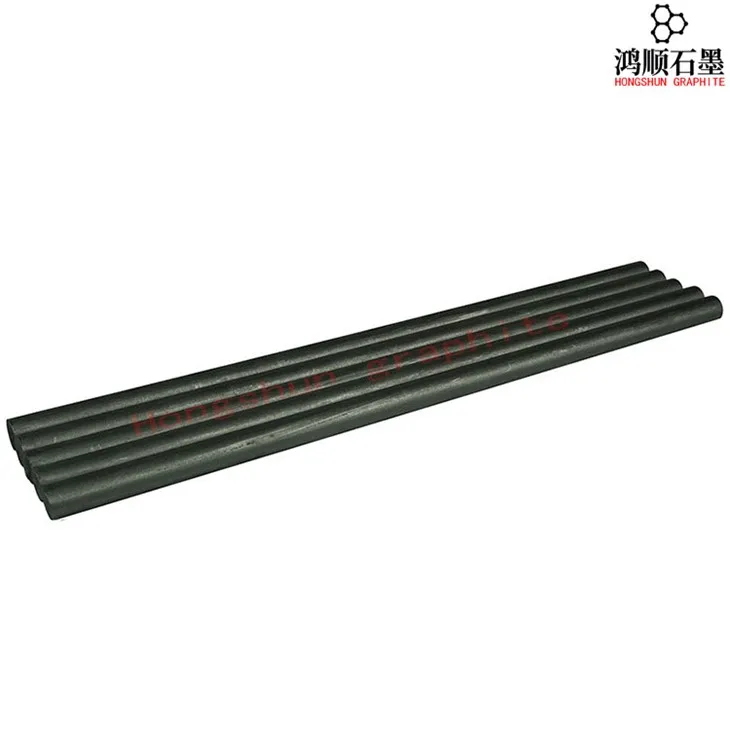
Another aspect is the mechanical stability of the graphite rod. The surface tension can influence the adhesion between the graphite particles in the rod. A proper surface tension helps maintain the integrity of the rod structure. If the surface tension is off, it could lead to the graphite particles coming loose, which would not only weaken the rod but also potentially contaminate the electrolyte solution. This is especially important in high - energy applications where the rod has to withstand a lot of stress.
Now, let's consider the manufacturing process. During the production of electrode graphite rods, the surface tension can be controlled to some extent. For example, the use of certain additives or the way the rod is heat - treated can affect the surface tension. As a supplier, we pay close attention to these factors to ensure that our Electrode Graphite Rod meets the highest standards of performance.
In some applications, like in high - temperature environments, the surface tension of the graphite rod can change. High temperatures can reduce the cohesive forces between the molecules, altering the surface tension. This change can have a significant impact on the rod's performance. For instance, in an arc furnace where the electrode graphite rod is used, the changing surface tension due to high temperatures can affect the arc stability and the overall efficiency of the melting process.
We also offer High Density Graphite Rod and High Purity Graphite Electrode Rod. These specialized rods have different requirements when it comes to surface tension. High - density graphite rods, for example, need to have a surface tension that allows for good heat transfer while maintaining their structural integrity under high pressure. High - purity graphite electrode rods require a very stable surface tension to ensure consistent and pure electrochemical reactions.
To measure the surface tension of our graphite rods, we use advanced techniques. We can then use this data to fine - tune our manufacturing processes. By constantly monitoring and adjusting the surface tension, we can offer graphite rods that perform better and last longer.
So, if you're in the market for electrode graphite rods, you should definitely consider the surface tension factor. It might seem like a small detail, but it can make a huge difference in the performance of your electrochemical systems or other applications where these rods are used.
If you're interested in learning more about our electrode graphite rods or have any questions about how surface tension affects their performance, feel free to reach out. I'm always happy to have a chat and help you find the right product for your needs. Whether you're a small - scale researcher or a large - scale industrial user, we've got the graphite rods to suit your requirements.
Let's start a conversation and see how we can work together to improve your operations with our high - quality electrode graphite rods.
References
- Some relevant textbooks on materials science and electrochemistry
Note: The above blog contains fictional websites and placeholders for references due to the constraints of the task. In a real - world scenario, proper and authentic references should be provided.