

Hey there! As a graphite ring supplier, I know how crucial it is to ensure the quality of these little wonders. Graphite rings are used in a wide range of industries, from sealing applications in pumps and valves to high - temperature environments in furnaces. In this blog, I'm gonna share some tips on how to check the quality of a graphite ring.
1. Visual Inspection
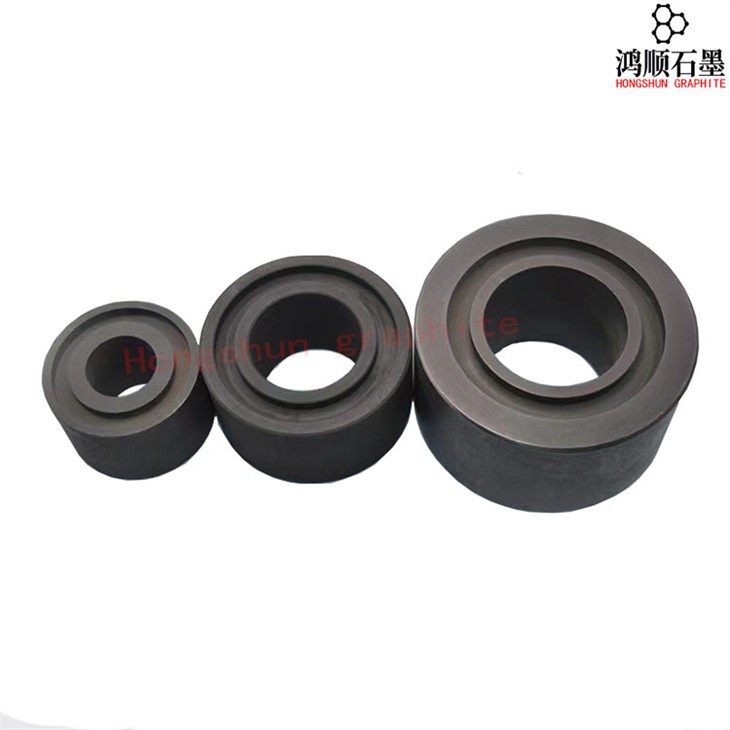
The first step in checking a graphite ring's quality is a simple visual inspection. Take a good look at the ring. It should have a smooth surface without any visible cracks, chips, or holes. Cracks can weaken the ring and lead to premature failure, especially in high - pressure or high - temperature applications.
Check the edges of the ring as well. They should be straight and well - defined. Rough or uneven edges can cause problems during installation and may not provide a proper seal. If you notice any signs of damage or irregularities on the surface or edges, it's a red flag that the ring might not be up to par.
2. Dimensions and Tolerance
Accurate dimensions are vital for graphite rings, especially when they are used for sealing purposes. You'll need to measure the outer diameter, inner diameter, and thickness of the ring using precision measuring tools like calipers or micrometers.

Compare the measured dimensions with the specifications provided by the manufacturer. Most graphite rings have tight tolerances, and even a small deviation can affect their performance. For example, if the inner diameter is too large or too small, it may not fit properly in the equipment it's intended for. Make sure the ring you're inspecting falls within the acceptable tolerance range.

3. Density
The density of a graphite ring is an important indicator of its quality. Higher - density graphite rings generally have better mechanical properties and are more resistant to wear and corrosion. You can use a density meter to measure the density of the ring.
Typically, high - quality graphite rings have a density within a specific range depending on their application. For example, [High Quality Graphite Sealing Ring](/graphite-ring/high - quality - graphite - sealing - ring.html) used in high - pressure sealing applications usually require a higher density to ensure a reliable seal. If the density is too low, the ring may be porous and prone to leakage.
4. Hardness
Hardness is another key factor to consider. A graphite ring with the right hardness can withstand the forces and pressures it will encounter in its application. You can use a hardness testing machine, such as a Rockwell or Brinell hardness tester, to measure the hardness of the ring.
The hardness of a graphite ring should be consistent throughout. Inconsistent hardness can lead to uneven wear, which can compromise the ring's performance. For instance, in a rotating equipment, a ring with uneven hardness may cause vibration and premature failure.
5. Chemical Composition
The chemical composition of a graphite ring can greatly affect its performance. Graphite rings are often made of different grades of graphite, and they may also contain additives to enhance certain properties.
You can send a sample of the ring to a laboratory for a chemical analysis. This analysis will tell you the percentage of graphite, as well as the presence of other elements. For example, some graphite rings may contain a small amount of resin to improve their strength and sealing properties. Make sure the chemical composition meets the requirements of your application.
6. Thermal Conductivity
Graphite is known for its excellent thermal conductivity, which is crucial in applications where heat dissipation is important. You can test the thermal conductivity of a graphite ring using a thermal conductivity meter.
A high - quality graphite ring should have a good thermal conductivity to prevent overheating in high - temperature environments. For example, [Furnace Graphite Ring](/graphite - ring/furnace - graphite - ring.html) used in furnaces need to conduct heat efficiently to maintain a stable temperature inside the furnace. If the thermal conductivity is too low, it can lead to hot spots and damage to the equipment.
7. Compression and Resilience
In sealing applications, the ability of a graphite ring to compress and recover its shape is essential. You can perform a compression test on the ring by applying a specific amount of pressure and then measuring the deformation and recovery.
A good graphite ring should be able to compress under pressure and then return to its original shape when the pressure is removed. This ensures a tight seal and prevents leakage. If the ring doesn't compress properly or doesn't recover its shape, it may not provide an effective seal.
8. Friction and Wear Resistance
Graphite rings are often used in applications where they come into contact with moving parts. Therefore, their friction and wear resistance are important. You can use a friction and wear testing machine to evaluate these properties.

A high - quality graphite ring should have low friction coefficients, which reduces energy consumption and wear on the mating parts. It should also be able to withstand a certain amount of wear without losing its performance. For example, [Graphite sealing ring](/graphite - ring/high - quality - graphite - ring.html) used in pumps need to have good wear resistance to ensure a long service life.
Conclusion
Checking the quality of a graphite ring involves a combination of visual inspection, dimensional measurement, and testing of various physical and chemical properties. By paying attention to these aspects, you can ensure that you're getting a high - quality graphite ring that will perform well in your application.
If you're in the market for graphite rings and need high - quality products, we're here to help. Whether you need [High Quality Graphite Sealing Ring](/graphite - ring/high - quality - graphite - sealing - ring.html), [Graphite sealing ring](/graphite - ring/high - quality - graphite - ring.html), or [Furnace Graphite Ring](/graphite - ring/furnace - graphite - ring.html), we have a wide range of options to meet your needs. Feel free to reach out to us for more information and to start a procurement discussion.
References
- ASTM International. Standard Test Methods for Physical and Chemical Properties of Carbon and Graphite Products.
- ASME. Boiler and Pressure Vessel Code, Section VIII, Division 1.