


What Is Graphite Box?
Graphite box, also called graphite square crucible, can be used in the sintering process of negative electrode materials or positive electrode materials in the lithium battery industry. It is mainly used as a carrying container for powder and is placed in a furnace for heating. Under the protection of inert gas, its service life will be extended. Longer, generally according to the type of kiln, the bottom plate and cover plate will be customized. It is widely used by high-temperature furnace companies and lithium iron phosphate companies. There are two forming processes. One is to dig out through machining and then form it through high-precision CNC processing. , one is press molding, which applies high-pressure molding in the mold and undergoes high-temperature carbonization molding.
Advantages of Graphite Box
Enhanced corrosion resistance and chemical inertness
Graphite crucibles are highly resistant to corrosion. This is crucial when handling metals and alloys at high temperatures. Their chemical inertness means they do not react with the substances being melted, preventing contamination and ensuring the purity of the final product. This is particularly important in industries like jewelry making and metal alloy production, where even minor impurities can significantly affect the quality of the end product.
Improved strength and stability at high temperatures
High-purity graphite crucibles maintain their structural integrity at extreme temperatures, often up to 5000°f. This high-temperature stability is critical in applications where prolonged exposure to heat is necessary. Unlike some other materials, graphite does not require additional linings for protection against elements like sulfur, which can degrade other materials over time.
Extended service life
Due to their high purity and resistance to oxidation, graphite crucibles have a longer service life compared to other types of crucibles. This longevity reduces the need for frequent replacements, making graphite crucibles a cost-effective choice in the long run.
Thermal shock resistance
Graphite crucibles are known for their excellent thermal shock resistance. This property allows them to withstand rapid temperature changes without cracking or breaking, which is common in processes that involve sudden cooling or heating.
Ease of precise machining and customization
Graphite crucibles can be precisely machined and are available in various sizes and shapes. They can also be custom-made to meet specific manufacturing requirements, although this might come at a higher cost. This flexibility in design and size makes them suitable for a wide range of applications.
Low specific resistance
The low specific resistance of graphite allows for better heat distribution within the crucible, ensuring that the material being melted is heated evenly. This is crucial for maintaining the quality and consistency of the melted material.
Superior performance in high-temperature applications
In summary, graphite crucibles are superior in terms of their ability to handle high temperatures without degradation, their resistance to chemical reactions, and their overall durability. These factors make them a preferred choice in industries that require high-temperature melting processes, ensuring the production of high-quality, pure materials.

Graphite thermal field is a kind of industrial heating equipment widely used in metallurgy, glass, ceramics, chemical industry and other fields.

Graphite sagger is used as a material holding device. It utilizes the good thermal conductivity of graphite to facilitate the material to fully react in a short time.

Graphite screws refer to screws made of graphite. They are more resistant to high temperatures than iron or steel and can melt at up to 3800 degrees Celsius.

Graphite heater is a heating device that uses graphite material as a heating element. Graphite heater has excellent thermal conductivity, high temperature stability, corrosion resistance and other characteristics.

Graphite parts can be used as refractory materials including, crucibles, continuous casting powder, mold cores, mold detergents, as conductive materials, and are widely used in the electrical industry as electrodes, brushes, carbon rods, carbon tubes, positive electrodes of mercury rectifiers.

Graphite sheets are a new type of heat-conducting and heat-dissipating material that conducts heat evenly in two directions, shields heat sources and components while improving the performance of consumer electronics.

Graphite discs are graphite discs made of isotropic graphite. The packing density can reach 1.7 to 1.9. The heat resistance temperature can reach 2000 degrees Celsius in an inactive atmosphere.

Graphite screws, also often called graphite bolts and screws, are used in conjunction with nuts. Hongshun Graphite uses high-strength materials to process graphite bolts, which work well with nuts and have the characteristics of high density, high temperature resistance, wear resistance, and good conductivity.

Graphite box, also called graphite square crucible, can be used in the sintering process of negative electrode materials or positive electrode materials in the lithium battery industry. It is mainly used as a carrying container for powder and is placed in a furnace for heating.
Why Choose Us
Dedicated team
Our success is not solely attributed to our product range; it's also a result of our exceptional team. We take immense pride in our dedicated and passionate employees who work tirelessly to ensure your needs are met.
Service details
Hongshun has grown together with its customers based on their confidence and trust. Its invaluable customers attest to its reliability.
Products developed with customer feedback
Hongshun commitment to customer satisfaction is the basis of its powerful and stable products.
Types of Graphite Box
Pure graphite crucible
The carbon content is generally greater than 99.9%, and it is made of pure artificial graphite material. It is only recommended to use carefully for electric furnaces.
Clay graphite crucible
It is made of natural graphite powder mixed with clay and other oxidation-resistant materials. It is suitable for factories with low labor cost and low operating rate.
Silicon carbide graphite crucible
It is made of natural graphite powder, silicon carbide, aluminum oxide, etc. And added with an anti-oxidation layer. Suitable for high temperature smelting, popular demand.
The silicon carbide graphite crucible is formed by isostatic pressing, and the crucible is pressed by an isostatic pressing machine. The service life is generally 2-4 times that of the rotary formed silicon carbide graphite crucible. It is the most suitable for aluminum and zinc oxide. Due to the high cost of isostatic pressing, there is generally no small crucible.
Metals Melted in Graphite Box
Copper
Copper based alloys that are melted in a fuel fired furnace are processed using a silicon carbide graphite crucible due for thermal shock resistance.
Aluminum
Crucibles for the processing of aluminum and aluminum alloys are carbon or ceramic bonded clay graphite and silicon carbide since these metals melt at 400°C or 750°F to 1600°C or 2912°F.
Gold
Graphite crucibles used for melting gold are made of a superior grade graphite and have thermal shock resistance, thermal stability, oxidation resistance, and excellent mechanical strength. They are designed to withstand temperatures of over 2000° C or 3632° F.
Silver
Graphite crucibles for melting silver are similar to those used to melt gold and capable of withstanding temperatures over 2000° C or 3632° F. The body of the crucible is made of natural graphite and keeps its chemical and physical properties. When melting at a high temperature, the thermal coefficient is small but has strain resistance to rapid heating or cooling.
Brass
Brass has a low melting point and must be heated rapidly before the component metals oxidize. For working with brass, a graphite crucible is ideal due to its durability and ability to heat up quickly.
Application of Graphite Box


High-temperature furnace
Graphite cartridges are used as crucibles and containers in high-temperature furnaces for processes such as melting, casting, and heat treatment of metals and alloys. They can withstand extreme temperatures without deformation or alignment
Reactions occur in the processed material.
Chemical reactors
Graphite cartridges are used in the chemical industry as a reaction vessel for processes involving corrosive or reactive substances. Their chemical temperament makes them suitable for handling a wide range of chemicals.
CVD (Chemical Vapor Deposition) chamber
In semiconductor manufacturing and thin film deposition processes, graphite cartridges are used as chambers or boats to accommodate in CVD processes due to their high temperature stability and non-reactivity substrate and source material.
Graphite anode
In the electrochemical process, graphite cartridges can be used as anodes due to their conductive properties. They are used in applications such as electroplating, water treatment, and electrolysis.
laboratory equipment
Graphite cartridges are used in a variety of laboratories, including as sample containers in high-temperature and chemically corrupt environments.
Solar and photovoltaic industry
In the production of silicon wafers for solar cells and photovoltaic modules, graphite cartridges are used for the purification and crystallization of silicon.
Sintering and powder are not metallurgized
Graphite cartridges are used in the sintering process, in which the powdered material is heated to a high temperature to melt and form a solid object. They provide non-reactivity to the sintering process Environment.
Heat insulation
Graphite cartridges can be used as thermal insulators, to protect sensitive components from extreme high temperatures, or to create controlled heating environments in scientific and industrial environments.
Crystal growth
In single crystal production, such as single crystals for semiconductor devices, graphite cartridges are used as crucibles to promote controlled crystal growth.
Powder and bulk material handling
Graphite cartridges can be used in industries that handle bulk materials such as powders, and their lubricity helps prevent material from sticking or caking.
Nuclear and aerospace applications
Graphite cartridges can be used in nuclear reactors, research facilities, and aerospace components due to their ability to withstand high temperatures and radiation.
Heat exchanger
In some special applications, graphite cartridges can be used as part of a heat exchanger, especially in corrosive environments.
The graphite crucible is strictly protected from moisture and must be stored in a dry place or on a wooden shelf.
When handling, handle with care, and it is strictly forbidden to shock.
Before use, it needs to be heated by drying equipment or furnace, and the temperature is gradually raised to 500 ° c.
The crucible should be placed below the level of the furnace mouth to prevent the top ofthe crucible from being worn by the furnace cover.
When feeding,it should be based on the crucible's melt volume., Do not add too much materia, and prevent the crucible from shrinking ifit is too tight.
The furnace tool and crucible clip should conform to the shape ofthe crucible, and the middle part ofthe clip should prevent the crucilble from being damaged by force.
When removing the molten slag and sticky coke on the inner and outer walls ofthe crucible,tap lightly to prevent damage to the crucilble.
A suitable distance should be maintained between the crucible and the furnace wal, and the crucible should be placed in the center of the furnace.
The use of appropriate amount of accelerants and additives will reduce the service life of the crucible.
During the use process, turn the crucible once a week to prolong the service life of the crucible.
Prevent strong corrosive flames from directly spraying the sides and bottom of the crucible.
Process of Graphite Box
Green petroleum coke production.
The production of green petroleum coke from heavy oils used for catalytic cracking or gasoline refinement will be the first step. The first carbon precursor is used in synthesizing graphite.
Post-processing
Other post-processing techniques might be used after graphitization. Li-ion batteries are also shapable, classifiable, or coatable to give great packing efficiency and performance. Other uses may have different specific post-processing requirements.
Graphitization
The needle coke is then subjected to temperatures greater than 2500°c in an electric furnace for graphitization. The carbon atoms rearrange during overheating, which transforms the coke into graphite. Graphitization gives more beneficial features and enhances the graphite substance's conductiveness.
Calcination
During the calcination of the green petroleum coke, a high-temperature process takes place at about 1300°c to 1400°., when this heat excursion removes volatile materials and contaminants from the coke, needles coke is produced. This higher level of carbon content provides the perfect prototype for that subsequent phase.
Safety Precautions When Using the Graphite Box
Use only pliers to handle hot and cold crucibles to prevent scalding and ensure safety. Make sure the tip of the pliers is clean to avoid contamination.
Never touch a red-hot crucible with pliers, as this can damage the crucible and pliers.
Do not place the crucible directly on a table or any surface. Use clean plates in the dryer to avoid contamination.
Consider using different crucibles to handle different types of metals to prevent contamination. Always empty the crucible completely after each use to prevent the remaining metal from expanding when reheating, which could damage the crucible.
"Temper" the crucible by heating it to around 500°F (260°C) for 20 minutes before use. Heat the crucible until it is red-hot, then let it cool slowly. This process removes any moisture from the crucible and makes it ready for use.
When using the furnace, gently close and open the furnace door during use to prevent damage to the parts. When sampling, handle the crucible pliers gently to ensure safety and avoid damage to the furnace.
When the temperature exceeds 600 degrees, do not open the furnace door, and then open the door after the temperature in the furnace cools down to avoid scalding.
After the experiment is completed, remove the sample from the heating device and turn off the power. When placing the sample in the furnace, the door should be slightly open and carefully clamped after the sample has cooled slightly to prevent burns.
Transfer the heated crucible to a dryer to cool.
Place the crucible in a dry place and preheat it along with the metal to be melted while the furnace heats up. Moisture can cause the crucible to break when heated.
Ensure that the crucibles used in the chemical analysis are clean and free of contaminants that can affect the accuracy of the results. Heat the crucible to high heat to burn off any impurities before use. Weigh crucibles and their lids with high precision in advance for accurate results.
If a steel crucible is used, be aware that the inner surface may peel or scale. This fouling can contaminate the melt and weaken the crucible wall. Consider applying a coating such as Marcote-7 to provide protection between the steel crucible and the molten metal.
Use suitable pliers to handle the crucible carefully. Pliers are a lifting tool that prevents the crucible from being damaged or failing.
When using the furnace, the furnace door should be gently closed to prevent damage to the parts. The crucible clamp should be handled carefully when sampling to ensure safety and avoid damage to the furnace chamber.
When the temperature exceeds 600°C, the furnace door shall not be opened, and the door can be opened only after the temperature in the furnace has cooled naturally.
At the end of the experiment, remove the sample from the heating device and turn off the power. When placing the sample in the laboratory muffle furnace, the furnace door should be opened slightly and carefully clamped after the sample has cooled slightly to prevent burns.
When the muffle furnace is not in use, the power supply should be cut off and the furnace door should be closed to prevent moisture from eroding the refractory materials.
How to Install The Graphite Box
Graphite cartridge materials can be divided into three types: artificial graphite, clay combined graphite, and carbon bone. The graphite cartridge is made of graphite electrode material, and the graphite clay crucible is made of natural flake graphite combined with clay, which is currently only used for the smelting of a small amount of high-temperature cast iron, cast steel and precious metals, while the clay crucible is used for the smelting of non-ferrous metals such as copper alloy and aluminum alloy. In the process of installing the graphite cartridge, the following installation skills should be mastered: before installation, check whether the coil mud filling is intact and whether the shape is approximately round. If necessary, it should be repaired and dried thoroughly.
Second, install grounding protection and grounding wires. Third, fill the area close to the coil mud with a flat layer of medium, such as mica sheets or glass cloth, and make sure that the lamination is in the same direction. Fourth, add 3 to 4 inches of filler to the bottom of the furnace and gently tap to remove gas from each layer, scraping off the filler before moving on to the next layer.
Company Introduction
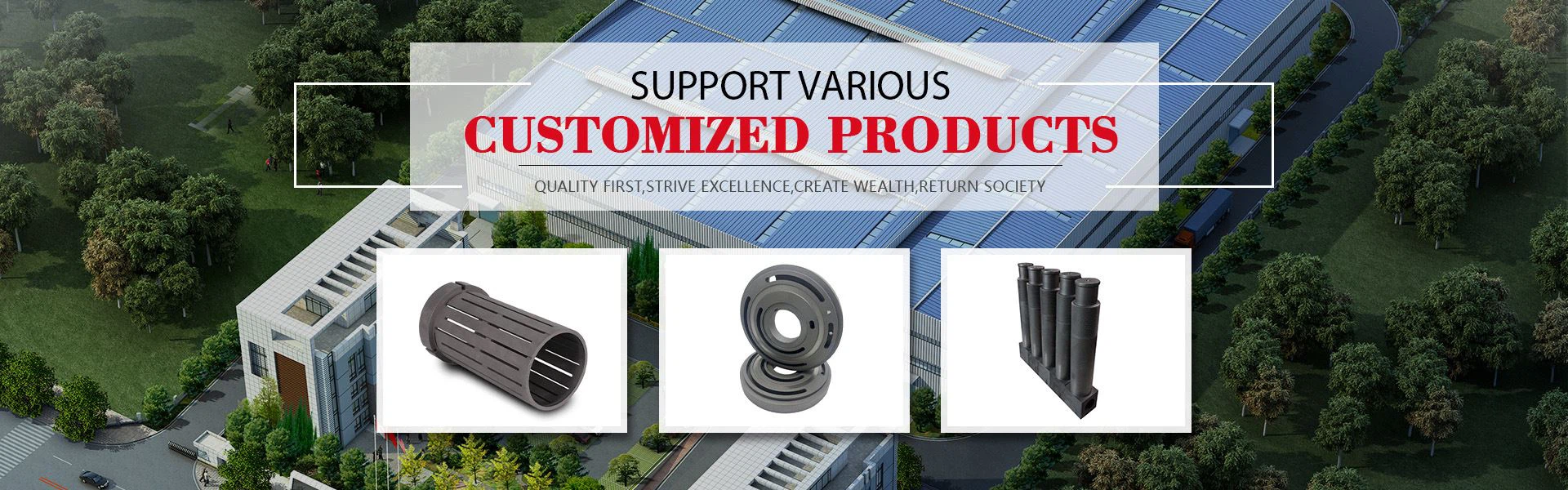
Huixian Hongshun Graphite Co., Ltd. focuses on graphite design and processing. The company has more than ten years of experience in graphite processing. The company has a series of completed production systems for design and processing.


Our team can design various graphite products for you.
Support drawing customization and sample processing.
Can provide you with 24-hour after-sales service and technical support.
Recommend products suitable for you at reasonable prices and ship quickly.
FAQ
Hot Tags: graphite box, China graphite box manufacturers, suppliers, Graphite Sagger, High Hardness Graphite Rod, Graphite Plate, Graphite Disc, Graphite Rod, Isostatic Graphite Ring