

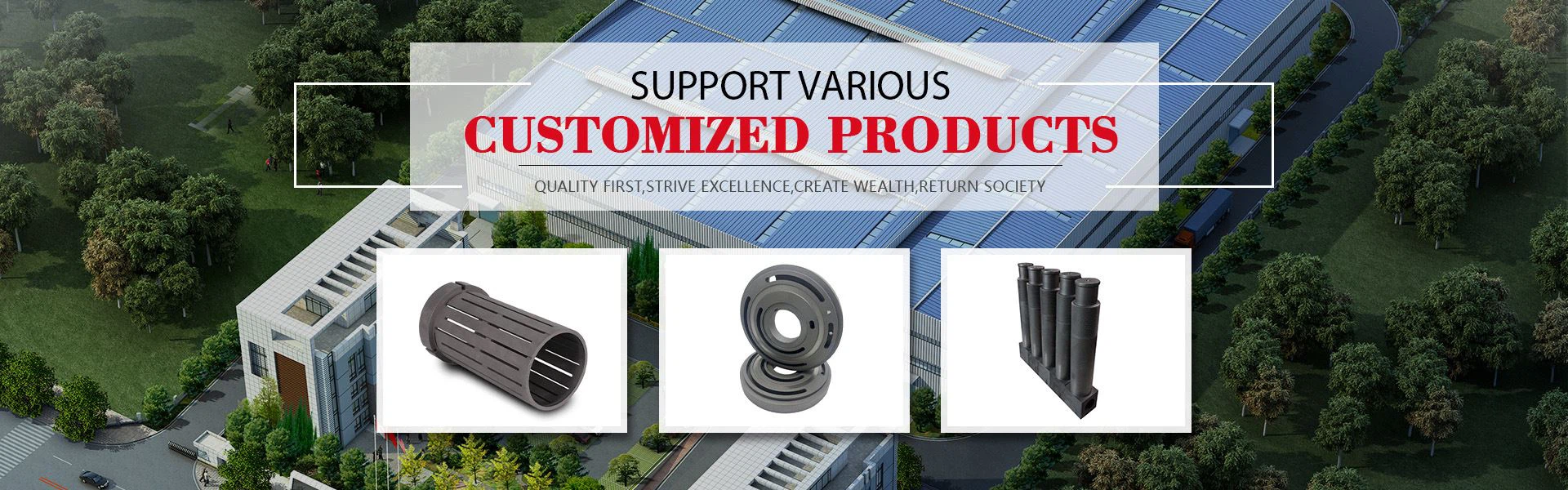
Graphite rod is a raw material with stable physical properties, corrosion resistance, and is not easily reacted with drugs such as acid and alkali. It is commonly used in the production and processing of graphite plates, graphite anode plates, graphite bipolar plates, and other commodities. It is used in metallurgical industry, petrochemical equipment, mechanical engineering, electronic device industry chain, China's nuclear industry, and national defense security.
Due to the fact that graphite rods can be used to produce refractory insulation materials, conductive raw materials, metal composite materials, lubricants, heat-resistant rubber seals, anti-corrosion raw materials, insulation materials, adsorption raw materials, wear-resistant materials, and radiation resistant materials.
1. Fire prevention. Graphite refractory insulation materials mainly include overall casting raw materials, magnesium carbon bricks, and aluminum graphite refractory insulation materials.
2. Conductivity. There are also positive grades used for electric grade and carbon brush, such as TV series graphics cards and memory tube coatings.
3. Moisturizing. Graphite is often used as a lubricant in mechanical engineering. Lubricating grease usually cannot be applied under fast, high temperature, and high pressure standards, while graphite metal composite materials can operate at high rolling rates at temperatures between -200 and 2000 ℃ without the need for lubricating grease.
4. Corrosion resistance. Graphite, which has undergone unique production and processing, has corrosion resistance and good heat transfer properties, and is widely used in petrochemical equipment.
5. Metallurgical industry: Because graphite has a small coefficient of linear expansion and can withstand sudden changes in temperature, it can be used as a mold for glassware. After applying graphite, light metal can obtain accurate casting specifications, with a high rate of surface smoothness and good quality. It can be applied without production or slight production processing, thus saving a lot of metal materials.