


What Is Graphite Heater?
A graphite heater is a type of heating element that is made from graphite, a form of carbon. Graphite heaters are often used in high-temperature applications, such as in industrial furnaces and in semiconductor manufacturing.
Graphite heaters are known for their high thermal conductivity, which allows them to rapidly transfer heat to the surrounding material. They are also able to withstand extremely high temperatures, making them ideal for use in high-temperature applications.
Graphite heaters come in various shapes and sizes, depending on the specific application they are being used for. They can be cylindrical or rectangular in shape and may be coated with a protective layer to prevent oxidation at high temperatures.
In semiconductor manufacturing, graphite heaters are often used in chemical vapor deposition (CVD) processes, which involve depositing thin films of material onto a substrate. The graphite heater is used to heat the reactant gases, which then react with the substrate to form the desired material.
Advantages of Graphite Heater
Composition and structure
Graphite heaters are typically manufactured using high-purity graphite materials that are molded or machined into specific shapes, such as rods, tubes, plates, or custom configurations. The graphite used is typically manufactured with a low impurity content to ensure consistent performance at high temperatures.
Thermal conductivity
The excellent thermal conductivity of graphite allows for efficient heat transfer and uniform temperature distribution on the surface of the heating element. This feature is essential for precise, consistent heating in a wide range of applications.
High temperature resistance
Graphite heaters can withstand extremely high temperatures of a few hundred to a few thousand degrees Celsius without significant degradation or structural changes.
Electrical conductivity
Graphite is an excellent conductor of electricity. When an electric current is passed through a graphite heating element, the graphite heating element generates heat due to its inherent resistance, making it ideal for resistance heating applications.
Chemically inert
Graphite's chemical resistance makes it suitable for use in a variety of corrosive or chemically active environments where other materials may degrade or react with their surroundings.
Customizability
Graphite heaters can be adapted to specific applications by adjusting their size, shape, and configuration. This flexibility allows it to be optimally integrated into a wide range of industrial processes.
Long life and durability
Graphite heaters exhibit good mechanical stability under thermal stress, resulting in longer service life and stable performance.
Heating uniformity
The combination of high thermal conductivity and resistance ensures that the graphite heater provides uniform and controlled heating on its surface, minimizing temperature variations.

Graphite thermal field is a kind of industrial heating equipment widely used in metallurgy, glass, ceramics, chemical industry and other fields.

Graphite sagger is used as a material holding device. It utilizes the good thermal conductivity of graphite to facilitate the material to fully react in a short time.

Graphite screws refer to screws made of graphite. They are more resistant to high temperatures than iron or steel and can melt at up to 3800 degrees Celsius.

Graphite box, also called graphite square crucible, can be used in the sintering process of negative electrode materials or positive electrode materials in the lithium battery industry. It is mainly used as a carrying container for powder and is placed in a furnace for heating.

Graphite parts can be used as refractory materials including, crucibles, continuous casting powder, mold cores, mold detergents, as conductive materials, and are widely used in the electrical industry as electrodes, brushes, carbon rods, carbon tubes, positive electrodes of mercury rectifiers.

Graphite sheets are a new type of heat-conducting and heat-dissipating material that conducts heat evenly in two directions, shields heat sources and components while improving the performance of consumer electronics.

Graphite discs are graphite discs made of isotropic graphite. The packing density can reach 1.7 to 1.9. The heat resistance temperature can reach 2000 degrees Celsius in an inactive atmosphere.

Graphite screws, also often called graphite bolts and screws, are used in conjunction with nuts. Hongshun Graphite uses high-strength materials to process graphite bolts, which work well with nuts and have the characteristics of high density, high temperature resistance, wear resistance, and good conductivity.

Graphite heater is a heating device that uses graphite material as a heating element. Graphite heater has excellent thermal conductivity, high temperature stability, corrosion resistance and other characteristics.
Why Choose Us
Dedicated team
Our success is not solely attributed to our product range; it's also a result of our exceptional team. We take immense pride in our dedicated and passionate employees who work tirelessly to ensure your needs are met.
Service details
Hongshun has grown together with its customers based on their confidence and trust. Its invaluable customers attest to its reliability.
Products developed with customer feedback
Hongshun commitment to customer satisfaction is the basis of its powerful and stable products.
Application of Graphite Heater
Metallurgical field
Graphite heaters are mainly used in metallurgy for high-temperature heating of railways, steel and non-ferrous metals. For example, graphite heaters can be used for heat treatment and drying of railway lines on railways.
Mechanical field
Graphite heaters are mainly used in the mechanical field for heating in forging and heat treatment processes. For example, a graphite heater can be installed in the roll seat of a cold rolling mill to heat steel plates.
Chemical industry
Graphite heaters are mainly used in the chemical industry for oil refining and chemical heating. For example, graphite heaters can be used to increase the viscosity of crude oil, making it easier to transport.
Electronics
Graphite heaters are used in electronics for heating and annealing semiconductor devices. For example, in semiconductor processing, graphite heaters can be used to increase the temperature of wafers and reduce production time.
What Is the Temperature Dependence of a Graphite Heater
Mechanical strength
The mechanical strength of graphite heaters increases with temperature and can reach up to 2700 K. At this temperature, the graphite heater is about twice as strong as at room temperature. However, above 2700 K, its strength begins to decrease.
Oxidation
Graphite heaters are sensitive to oxygen and should not be exposed to air at high temperatures. Oxidation starts at around 500°C and can lead to rapid mass loss. Repeated exposure to hot air can lead to a decrease in material thickness and ultimately structural damage.
Temperature limit
Graphite heaters can be used at temperatures up to 10°C at 2-2450 Torr pressures. If the pressure is further reduced to 10-4 Torr, graphite heaters can usually be used at temperatures up to 2150°C.
Graphite heaterization
Increasing the temperature allows the carbon atoms in the graphite heater to move to a more suitable position, resulting in an ideal graphite heater with excellent performance. The graphite heater process occurs between 1900°C and 2000°C, resulting in the graphite heater layer straightening and reducing the interlayer distance.
Heat treatment
The properties of graphite heaters are enhanced by heat treatment up to 3000°C, making them ideal starting materials for a wide range of industrial applications. Graphite heater heat treatment has become an emerging market.
Thermal conductivity and electrical conductivity
Graphite heaters are good conductors of electricity and heat. It has excellent thermal properties and chemical resistance, making it ideal for thermal applications.
Industrial applications
Graphite heaters are used in a variety of industries, including the automotive industry, in the manufacture of brakes, clutch patches, mechanical seals, brake pads, friction parts, engine parts, and as a substitute for aluminum or steel in automotive frames.
Graphite heater heating element
The graphite heater heating element is made of a high-purity carbon composite material that offers excellent temperature uniformity, service life, mechanical strength, and repeatability. They feature a unique design that minimizes gas ionization at high temperatures and use a tapered fit power connection for easy removal and installation.
Graphite heater electric heating element
Graphite heaters have the advantages of stable resistivity, low temperature coefficient of resistance, small coefficient of thermal expansion, and large blackness, and are often used as materials for electric heating elements. However, it should be noted that graphite heaters are relatively soft at room temperature, easy to break or damaged, and should not be used in heating furnaces where it is difficult to replace heating elements. In addition, special care should be taken to prevent reactions with graphite heaters when selecting support and connection materials.
How to Maintain Graphite Heater


The first regular maintenance item to keep your graphite heater running efficiently is to remove contaminants from within the hot zone by running a cleanup cycle. This procedure is one of several preventative steps that helps maintain the overall health of your furnace.
Another maintenance item that you can perform on a schedule to extend the life of your hot zone is inspection of the heating elements. Heating elements are key in efficient operation of your furnace, so you should visually inspect the condition of the heating elements and shields on a regular basis. As you inspect these components, look especially for broken or missing pieces or loose connectors. Any element in poor condition can lead to uneven heating cycles which, in turn, can lead to loss of productivity. If you discover graphite components are missing or damaged, replace them immediately.
Keeping in stock some common hot zone components, including heating elements, posts, bolts, nuts, nozzles, etc. If you have these extra components handy, you're more likely to replace them immediately rather than letting the hot zone run under suboptimal conditions. With your hot zone and all of its components in good working condition, temperature uniformity is more easily achieved.
An easy but important maintenance item is to perform a daily check of the heating elements and shields for signs of discoloration. Discoloration in the furnace indicates contamination. If parts of the hot zone begin to show signs of discoloration, it could be a sign that oxygen is not getting in. A leak check should provide clues to where the leak is occurring. Without a diagnostic to identify and fix the leak, the graphite will keep degrading in the oxygen environment at temperatures around 700 f. Eventually, the graphite components in the hot zone will experience premature failure. Daily inspection for discoloration can eliminate this risk from oxidation.
Lastly, you will want to prevent arcing by hand-tightening nuts, bolts, and element connectors inside the furnace. This maintenance item should be performed on a weekly basis. When parts become loose, they can cause arcing, which then burns away the hot zone's insulation, affects the overall quality of the heating elements, and can lead to discoloration. Hand-tightening is the recommended method so as to avoid over-tightening and breaking of graphite heating elements.
These recommendations are all small but important things you can do to greatly extend the life of your graphite heater. Create a maintenance schedule and stick to it. It will yield cycle efficiencies and, ultimately, bottom line savings in the long run.
Graphite heaters play a vital role in achieving precise and uniform heating. By efficiently conducting heat, they help maintain the desired temperature throughout the crystal growth process. The excellent thermal conductivity of graphite ensures that heat is evenly distributed across the heater surface, minimizing temperature gradients and hot spots. This uniformity is critical to the controlled and consistent growth of single crystals, which directly affects their quality and performance.
In addition, the high thermal conductivity of graphite heaters enables rapid heating and cooling cycles, which reduces processing time for single crystal growth. The efficient heat transfer provided by graphite enables the furnace to quickly reach the desired temperature, thereby improving crystal production efficiency. In addition, the ability to cool quickly after the growth process helps speed up crystal extraction and minimize overall production time.
Graphite heaters also have good thermal stability, allowing them to withstand the extreme temperatures found in single crystal furnace environments. They can operate at high temperatures without significant performance degradation or deformation. This thermal stability ensures the life and reliability of the heater, reducing maintenance requirements and downtime during crystal growth.
Another advantage of graphite heaters is that they are compatible with vacuum or controlled atmosphere conditions commonly used in single crystal growth. Graphite is chemically inert and does not react with most gases, so it can maintain its thermal properties in a variety of environments. In summary, the excellent thermal conductivity of graphite heaters makes them an indispensable part of the thermal field of single crystal furnaces. Its ability to efficiently transfer heat and maintain temperature uniformity is essential for the controlled growth of high-quality single crystals. Graphite heaters enable rapid heating and cooling cycles, increase productivity, and provide excellent thermal stability in extreme environments. As the demand for high-performance single crystals continues to grow, the importance of graphite heaters in advancing crystal growth technology cannot be underestimated.
How the Graphite Heater Works
High purity graphite: Graphite heaters are typically made from high purity graphite. This material offers high thermal conductivity and excellent stability at high temperatures. It can withstand environments of high temperature and pressure, making it ideal for industrial heating applications.
Oxygen sensitivity: Graphite is highly sensitive to oxygen and can oxidize rapidly at temperatures above 500°c. This necessitates the use of graphite heaters in controlled environments, such as vacuum furnaces, to prevent oxidation and maintain structural integrity.
Electrical energy conversion: Electrical energy is fed into the graphite heater through graphite electrodes. The current passing through the graphite causes electrons to move and collide with graphite atoms, converting kinetic energy into heat. This heat is then transferred to the surrounding environment, effectively heating the space or material in contact.
Vacuum conditions: In vacuum environments, graphite heaters can operate at even higher temperatures (up to 2450°c at 10-2 torr and 2150°c at 10-4 torr) without oxidation, enhancing their efficiency and longevity.
Thickness and stability: To ensure mechanical stability and prevent structural failure, graphite heating elements are designed to be thicker than elements made from other materials. This design compensates for the decrease in electrical resistance with increased cross-sectional area, allowing for higher current flow at reduced voltages.
Connection and mounting: Graphite heating elements are often connected using graphite bridges bolted in place, ensuring a secure electrical connection. They can be mounted radially around the heating zone or on the rear wall and door interior to improve temperature uniformity.
Volatilization and contamination: In vacuum environments, graphite can volatilize, creating a carbon environment that may not be suitable for processing certain materials. Additionally, metals like copper and chromium can volatize and condense on the heater elements, potentially causing short-circuits.
Maintenance and replacement: Due to the low hardness of graphite at room temperature, these elements are prone to breakage and should be used in furnaces where replacement is feasible. Special care must also be taken to prevent the support and connection materials from reacting with graphite.
Company Introduction
Huixian Hongshun Graphite Co., Ltd. focuses on graphite design and processing. The company has more than ten years of experience in graphite processing. The company has a series of completed production systems for design and processing.


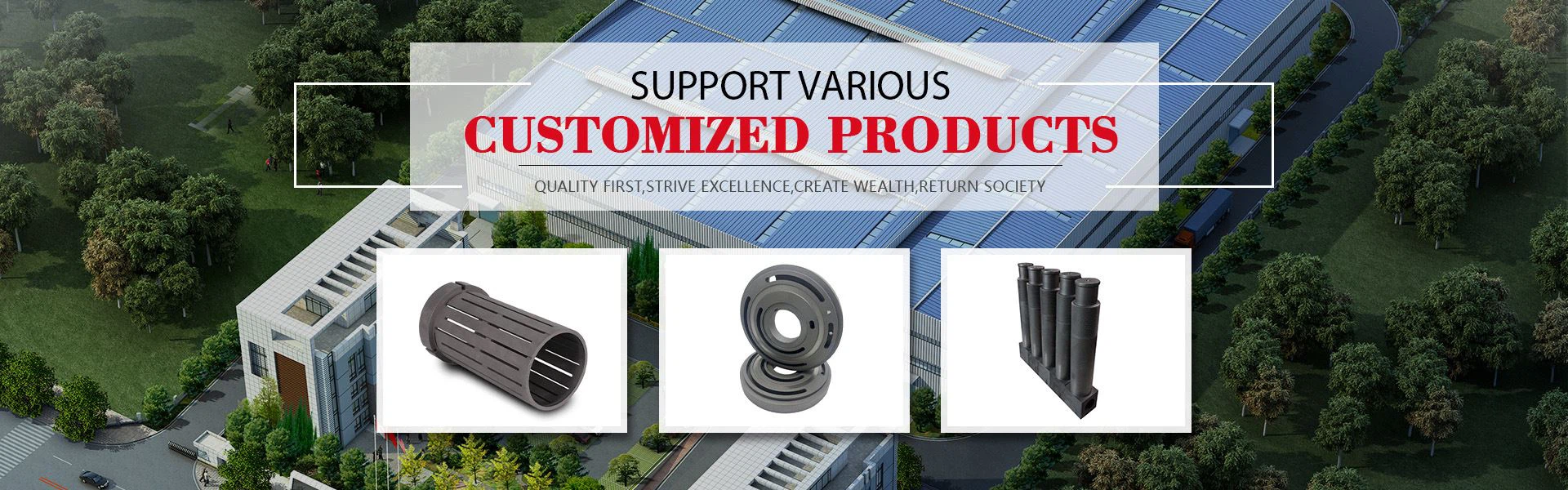
Our team can design various graphite products for you.
Support drawing customization and sample processing.
Can provide you with 24-hour after-sales service and technical support.
Recommend products suitable for you at reasonable prices and ship quickly.
FAQ
Hot Tags: graphite heater, China graphite heater manufacturers, suppliers, Graphite Sagger, Graphite Disk, Graphite Products, Graphite Parts, Graphite Screws, Graphite Thermal Field